Rapid-change corporate workshops for financial stress and private-enterprise culture
The cost of money stress
No financial education on the team
Pay goes up, but financial stress doesn't go down.
The workday gets contaminated with debt, emergencies, and poor liquidity.
Raises don't buy focus or peace of mind.
The company pays for time, attention, and energy it never gets back.
The cost of low ownership
The anti-company ideas going around that cool the relationship with work
"The company wins because someone loses": profit is seen as something taken, not something the team helps create.
"A salary is the least they can pay you": pay is taken as a stingy concession, never as an exchange.
"The capital is the owner's, not mine": tools, inventory, and margin get handled as someone else's, or not cared for at all.
"Going the extra mile only fattens someone else's pocket": people work to comply, not to care for, propose, or build.
Neither cost shows up as a line item. Both come straight out of focus, initiative, and the goodwill that makes a team worth more than its headcount.
Rapid-Change Corporate Workshops · 2 hours
Introducing the rapid-change workshops: two hours, in the one order that makes new behavior stick.
01
Boundary
The room stops treating the symptom as normal. Financial stress, resentment, or low ownership becomes visible as a cost the company has been absorbing without naming it.
02
Behavior
Participants identify the repeated action: the debt decision, the money habit, the asset-care problem, the way salary or profit is being understood.
03
Intellect
Only then does the economic explanation enter. It sticks because the participant has already seen where the old belief was costing them.
04
Decision
The workshop closes with a dated choice: a number, a criterion, a next action. That is why two hours can become observable behavior.
+4 ptsmeasured pre/post in Fernando Hallo's 23-person team, Quito (financial wellness).
4,800+students in 14 years as a university professor of Economics and the business environment (USFQ).
3 citiestested across corporate teams, university rooms, and invited talks in Brazil and Turkey.
If one of the two columns already sounds familiar, your company is already paying those invisible costs. The first step is not a sales call. It is a short diagnosis: which cost is leaking now, financial stress or low ownership? The diagnosis is free, and the work carries a guarantee: if the first session produces no observable change, the second is at no charge.
These workshops were built for USA, global, and bilingual teams that already feel the cost in productivity, judgment, and internal climate, even if they haven't named it precisely yet. They are two separate workshops: one orders the participant's personal financial life; the other corrects how the team understands salary, the company, profit, risk, and assets. Both run on the same mechanism, MindOS, but they work on different problems and can be booked separately.
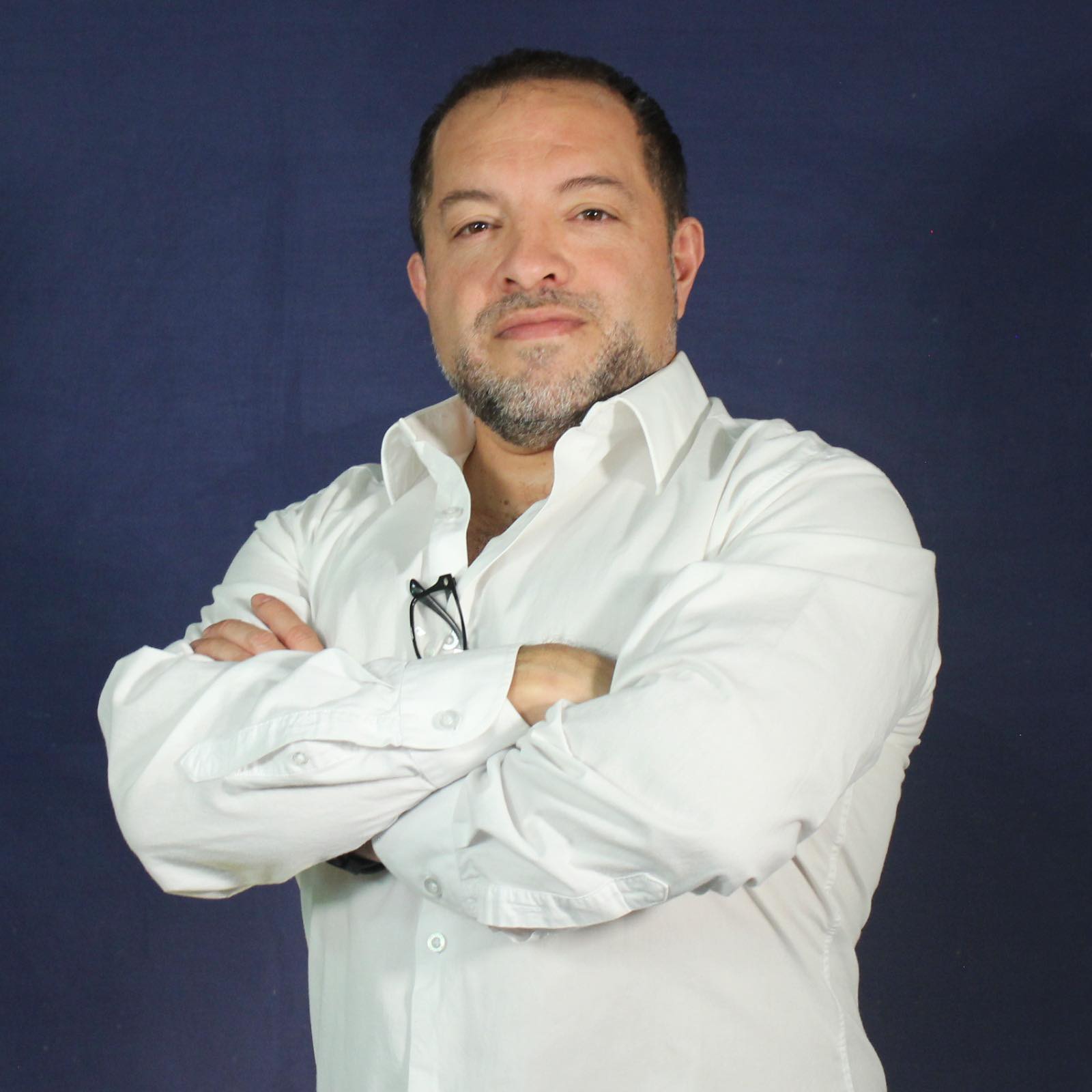
J.F. Carpio · Researcher in Economics and the business environment · 2026
For the business case
PwC tracks financial stress as a productivity problem. This page does not ask the company to buy wellness language. It shows where paid attention is being lost.
For the culture case
Gallup keeps finding the same pattern: engagement changes performance. The second workshop works on the economic beliefs that shape ownership, care, and initiative.
For the change case
McKinsey's transformation failure point is familiar: processes change, mindset does not. MindOS is the mechanism that keeps this from becoming another two-week enthusiasm spike.
The point is not to “deliver content.” It is to change how the team understands a decision before repeating it a hundred times.◐ Where your team actually stands
How many of these does your team already show?
Check the ones you recognize. Each one is a quiet cost, and naming it is the first move to ending it.
01 The mechanism
MindOS: the operating system that decides whether a training sticks, or fades within weeks.
MindOS is the model developed by psychiatrist Dr. Paul Dobransky on how the mind works. All behavior runs on four brain layers, in order: boundary, behavior, intellect, and decision. Conventional training enters through the intellect with new information, landing on a boundary and beliefs no one examined. That's why it lasts as long as the enthusiasm does. Sustainable intervention respects Dobransky's sequence: from the foundational, emotional layer up to the layer where decisions are made.
Carpio saw it after fourteen years in the classroom, training teams across three cities in Ecuador and speaking as a guest in Brazil and Turkey: people weren't failing because they didn't know. They were failing because the new idea was landing on top of an old, intact belief, about money, about the company, about salary. He changed the order of the intervention, and the change started to stick.
1Boundary
2Behavior
3Intellect
4Decision
When judgment changes, the way people interpret reports, priorities, and hidden cost changes too.
02 Not a confusing bundle
Two independent, modular workshops. Take one, the other, or both, and each rewards the company through a different path.
The company can bring in one, the other, or both. Workshop 1 reduces personal financial friction that leaks into work. Workshop 2 shifts how the employee interprets the company, salary, risk, and the capital around them.
Workshop 1 · financial wellness
Money and Personal & Family Finance
For teams that arrive at work carrying debt, inflation, poor liquidity, and postponed family financial decisions occupying mental space.
Own ROI: less financial stress during work hours, better debt/savings decisions, and a practical roadmap for liquidity, investment, and wealth protection.Workshop 2 · enterprise culture
Appreciation of Private Enterprise
For teams that inherited a win-lose narrative: "the company wins because the worker loses." That idea affects care, loyalty, initiative, and how they interpret the P&L.
Own ROI: better relationship with assets, salary, profit, business risk, and internal cooperation. Not motivation. Applied economic understanding.
The workshop's role is to order the discovery: let the participant see the system they were running without knowing it.Buyer fit
Different executives can defend the same program without using the same argument.
CEO
Payroll leakage, weak initiative, poor ownership, and a colder relationship with the company.
HR / People
Financial stress, engagement, retention risk, and a practical intervention that does not infantilize employees.
CFO
Paid hours lost to distraction, bad personal-money decisions, and avoidable friction around salary, profit, and margin.
L&D
Behavior change with pre-work, a dense two-hour session, homework, and observable results at the end instead of generic content delivery.
One workshop addresses private financial friction. The other corrects how the team interprets the company itself.
Why the investment pays
3 h
per week the average employee loses at work due to personal financial stress.
PwC Employee Financial Wellness Survey
+23%
profitability in companies with highly engaged teams vs the rest of the industry.
Gallup, State of the Global Workplace
70%
of organizational transformations fail, almost always because they changed processes and actions without ever touching the mindset.
McKinsey, Why Transformations Fail
PwC measures this in American workers, Gallup across more than a hundred countries, McKinsey across hundreds of corporate transformations. All three land on the same point, and it's the one that moved in Quito: Fernando Hallo's 23-person team raised its financial wellness by about 4 points.
Projection for your team: 25 people lose about 3 hours a week to financial stress today (PwC). Recover even part of that and your payroll frees up roughly 150 person-hours a month you are already paying for. That is focused work returning, and it shows up over the next two quarters.
Those numbers do not describe a talent problem. They describe a badly aimed intervention. Most corporate programs teach new skills on top of beliefs no one examined; two weeks later, the old operating system takes back control. Not for lack of willpower. For lack of intervention at the right brain layer.
The correct sequence starts with a recognizable crack: a monthly money habit, or an assumption carried every day about the company. Then the framework enters: boundary, behavior, intellect, and decision. The two workshops apply that sequence to personal money and private enterprise. They can be taken separately; together, they reveal the same pattern across both domains.
03 What the company buys
Not a nice talk. A two-hour intervention.
We design each session so the participant doesn't just "understand" an idea. They see it operating in their own habits, numbers, and work decisions. What the company is buying is not inspiration. It is a sequence capable of moving the participant from a recognizable crack to an observable decision.
A diagnosis that doesn't humiliate.People lower their guard because they aren't being accused. They're shown the system they were already running without seeing it.
A mechanism the manager can recognize.The workshop connects personal money, work judgment, productivity, and the relationship with the company, without turning it into a corporate sermon.
An observable exit.Every participant must leave with dated actions, not generic enthusiasm. The company is buying behavior change, not applause.
MindOS does not enter as rhetoric. It enters as structure: first a boundary, then a behavior, then an explanation, and finally a decision.
The right buyer does not need a “nice” talk. They need an intervention that can survive review, cost, and follow-through.Workshop 1 · 2 hours · Standalone
Money and Personal & Family Finance
From financial chaos and anxiety to control, new confidence, and real financial peace of mind.
The participant arrives with an inherited financial system: ideas about money, savings, debt, investment, and family security formed before they had tools to evaluate them.
BoundaryDraw the real map. Where money comes from (Carl Menger's commodity theory versus Nick Szabo's collectibles theory), its three roles (medium of exchange, unit of account, store of value), and liquidity as its defining trait. Saving as Menger defined it: voluntary abstention from present consumption. Without that map, every piece of financial advice just floats.
BehaviorMake the patterns legible. The spend-debt-stress cycle, paying the card minimum, spending "whatever's left," confusing assets with financial liabilities (a lot of accounting "assets" actually take money out of your pocket), and where each person sits in the cashflow quadrant: employee, self-employed, business owner, investor. Not moral failures. Correctable automatisms.
IntellectDeliver the tools, with the why. Investment as Böhm-Bawerk's "roundabout" production; compound interest working for or against you, with time as the multiplier; good debt vs bad debt; "pay yourself first"; Dave Ramsey's debt snowball; index funds vs value investing (Buffett style); and Harry Browne's Permanent Portfolio: 25% stocks, 25% long bonds, 25% gold, 25% cash, built to survive prosperity, inflation, deflation, or panic.
DecisionConcrete commitments with a date. The workshop closes with two or three decisions per person: minimum liquidity, debt to attack first, automatic savings percentage, first investment criterion. Date, number, next action.
The workshop starts with your real balance sheet, not theory: what comes in, what stays, where it goes.
Savings, liquidity, and store of value stop being floating words once the participant gives them order and numbers.
Money stops feeling like monthly fog and is understood again as flow, opportunity cost, and family protection.
Inside the workshop: the origin of money (Menger and Szabo) · the three roles and liquidity · Gresham's Law and the Cantillon Effect · saving and investment, the Austrian view (Menger, Böhm-Bawerk) · compound interest · assets vs financial liabilities · good debt and bad debt · the cashflow quadrant · pay yourself first · Ramsey's debt snowball · index funds vs value investing · Harry Browne's Permanent Portfolio · financial peace of mind (what it is and how to reach it) · banks and credit unions · insurance and the negative lottery · the Social Security paradox.
Format: 110 min workshop with live exercises · 10 min Q&A. Can be brought in without the private-enterprise workshop.
Optional material: brief readings, videos, and surgical homework at the end, at each participant's discretion. Nothing long, nothing generic.
Good debt vs bad debt, compound interest working for or against you: the arithmetic nobody taught in school.Workshop 2 · 2 hours · Standalone
Appreciation of Private Enterprise
From Karl Marx to Carl Menger: from win-lose to win-win.
The inherited operating system, in most cases, is a win-lose frame: the employer wins because the employee loses, profit is plunder, capital contributes nothing, and demanding more is always fair because "they have plenty." These ideas arrive before the contract, reinforced by social media and much of academia, and are almost never corrected with actual arithmetic.
BoundaryFrom win-lose to win-win. First the historical error falls: capitalism is not the stage after feudalism, it is its rival, and it was born in the merchant towns (the Hanseatic League, the Italian city-states, the Dutch United Provinces, Manchester), never in the capitals of political power. And the effect is measurable: humanity was equally poor for 200,000 years, and only in the last three centuries began to escape, more people in the last 40 years than in the prior 400. Employment exists because both parties prefer the exchange to not having it. The boundary isn't political. It's arithmetic.
BehaviorSee the frame in action. Withheld discretionary effort, company assets treated as foreign, information that doesn't get shared, loyalty that evaporates at the first tension. Not character traits. Consequences of a bad theory of the firm, the one that assumes "there would be a wage anyway, even without the owner." There wouldn't: without the capitalist who hires and absorbs the risk, the fixed wage does not exist.
IntellectThe full ledger. This is where Marxist surplus value falls, an error that is not Marx's but Adam Smith's, who confused the investor with the manager. If there are losses, the employee contributes nothing; if there are gains, the employee does not share them, because they did not share the risk: profit is not withheld wages. What does exist is Say's surplus value (1803, sixty-four years before Marx): the capitalist supplies tools, team, vision, and above all the clientele and the brand, the most valuable asset of any firm, and with that multiplies the worker's productivity. Say and Reisman give the foundations; each participant builds their own employment P&L and sees it in numbers.
DecisionA different frame, different decisions. The employee who understands Say's surplus value (the company as a multiplier of their productivity, not an exploiter) takes care of assets differently, talks about profit without resentment, and responds better under adversity, and values their job for what it is: a low-risk opportunity, a stable income without carrying the risk the owner takes on. And they understand catallactics: free exchanges repeat precisely because they benefit both sides.
Two incompatible theories of wage labor
Marxist surplus value
The exploitation myth · an error from Adam Smith
The company wins because the worker loses: zero-sum.
Profit is wages stolen from the worker.
Capital contributes nothing; only labor creates value.
Employment is a modern serfdom.
vs
Say's surplus value
The reality of exchange · Say (1803) + Reisman
Free exchange benefits both sides: win-win.
Without the capitalist who absorbs the risk, the fixed wage does not exist.
Capital supplies tools, clientele and brand, and multiplies productivity.
Employment is a risk pact: one absorbs it, the other receives a fixed income.
$1 : $45For every dollar the capitalist keeps, about 45 reach the rest of society (Nordhaus, 2004; Henrekson, 2017).
5×–6×The same person's productivity under a strong brand versus working on their own. That gap is Say's surplus value.
Marx versus Say: hiring doesn't extract, it potentiates.
The win-lose frame becomes visible when the team builds their own employment P&L in real time.
Capital, inventory, brand, and tools stop looking like “the owner's stuff” and start to be understood again as real productivity multipliers.
The workshop pulls the conversation down from vague ideology to a concrete grasp of margin, fixed salary, absorbed risk, and cooperation.
Inside the workshop: the historical error (capitalism as feudalism's rival, not its heir) · Adam Smith's theoretical error · why there is no wage without the capitalist · the risk pact · why Marxist surplus value does not exist · Say's surplus value (1803) · clientele and brand as the most valuable asset · the company as a productivity multiplier · catallactics and win-win exchange · Say's quote on the property of one's own industry.
Format: 110 min workshop with live exercises · 10 min Q&A. Can be brought in without the financial workshop.
Optional material: brief readings, videos, and surgical homework at the end, at each participant's discretion. Nothing long, nothing generic.
Let's look at two illustrated examples: PwC puts the productivity lost to financial stress at 3 to 7 hours per employee per week, and studies on financial-wellness and engagement programs report recoveries in the 5–20% range. The conservative end is enough to pay for the room.
Scenario A · 40-person team, Texas
The leak: 40 people × 3 distracted hours/week × $55 loaded/hour ≈ $26,000 a month in paid attention lost to money stress.
The return: recover just 10% of that and it is ~$2,600/month back. The full program ($9,900) pays back in under four months, then keeps returning.
Scenario B · 60-person team, both workshops
The leak: low ownership and resentment about salary, profit, and margin show up as weak discretionary effort, the cost no P&L line names.
The return: lift engaged effort by even 5% (well inside the engagement-to-performance gap Gallup keeps measuring) and the return dwarfs a $9,900 one-time cost.
Two named results so far, one per workshop: Fernando Hallo's 23-person team lifted its financial wellness about 4 points (Quito), and Multicines endorsed the private-enterprise workshop publicly through its marketing manager. US numbers will deepen these as the first US engagements close.
05 What changes after
Not enthusiasm. Different behavior.
Observable behaviors in the weeks following the workshop
Workshop 1 · Personal finance
Stops using the card to cover the month. Has a minimum liquidity number and knows it.
Distinguishes productive debt from consumer debt before signing.
Saves first, spends what's left. Not the other way around.
Workshop 2 · Private enterprise
Takes care of company assets as their own tools, because they understand they are.
Talks about profit and margin without resentment. Understands which part of the P&L depends on them.
Discretionary effort goes up. Not from loyalty. From economic logic understood.
Genuine loyalty toward the company appears: not the demanded kind, but the kind that comes from understanding the value they receive.
Every participant leaves with two or three dated decisions: minimum liquidity, debt to attack, automatic savings percentage.
Nothing is more certain than that the degree of economic progress of mankind will be commensurate with the degree of progress of human knowledge.
— Carl Menger, Principles of Economics, 1871
Real transformation doesn't happen because the participant reads a point and thinks "that makes sense." It happens because during the workshop they discover those points in their own numbers, with their own calculator, in real time. Their salary, their company, their money, their future: all working differently from what they were taught. And that doesn't get forgotten because it wasn't a motivational directive. It was arithmetic.
06 Who has been through here
A named result for each workshop. Real corporate rooms, not stock claims.
"Quite a good experience. People have given me very positive feedback. The core message is much clearer: we had it as an idea, but it wasn't sharp. Works well for brokers, insurers, and almost any business with active sales management."
— Fernando Hallo · Top-50 insurance broker, Quito · Ecuador · 2024
+4 pts
Workshop 1 — Money. The one number with a name behind it: Fernando Hallo's 23-person team took the personal-finance workshop and measured a new level of financial wellness, about a 4-point lift pre/post, in a real company in Quito (2024). Hallo praised the result himself. The kind of named, attributable number a CFO can take to a board, not a rounded-up vendor claim.
Fernando Hallo · Top-50 insurance brokerage · team of 23 · Quito · 20242×
Workshop 2 — Private Enterprise. Endorsed publicly, twice on X, to thousands. Multicines, a major Ecuadorian cinema chain, brought in the Appreciation of Private Enterprise workshop through then–marketing manager Santiago Cárdenas. In two hours it reframed salary, profit, and ownership and defused the win-lose, conflict narrative, and he was satisfied enough to recommend it in public, by name.
Santiago Cárdenas · then Marketing Manager, Multicines · Workshop 2 · Quito
"500 people trained in one morning on emotional stress management using neuroscience techniques."
— Corporate training evaluation · Mutualista Pichincha · Coord.: Arianna Cevallos · Quito, 2017
"A genuinely great training. Information I wasn't expecting that prepares me consciously, and it is applicable and practical. It is excellent to finally have the foundations of a strategy and a long-term perspective."
— M. Muñoz · interior and furniture designer · Quito, Ecuador
"By the third short video the investment had already paid for itself; they are packed with important information."
— Carlos Rodríguez · Loja, Ecuador · on J.F. Carpio's financial training
The real work of the workshop is to connect beliefs, behavior, capital, and decision without losing executive clarity.
When the session is well led, the manager's objection changes from “will this work?” to “which workshop should I start with?”
3,000attendees · Forum da Liberdade · Porto Alegre, Brazil · 2014
4,800+students over 14 years as professor of Economics and the business environment · USFQ · Quito
Juan Fernando Carpio has spent two decades turning Economics into decisions people can act on. Fourteen of them in front of a classroom: 4,800+ students at USFQ, the second most-requested professor in the Economics department, where he founded Ecuador's first Austrian and Institutional Economics track. He holds a Master in Entrepreneurial Economics from UFM and Boston University, and has pursued PhD work in Economics in Switzerland, currently paused at the thesis/dissertation stage.
Outside the classroom, the same method has trained 2,500 professionals at firms like Mutualista Pichincha, carried 30+ consulting engagements with documented ROI. He has also participated in a high-level executive-coaching program in Florida (Pompano Beach). He has translated Hoppe and Kinsella into Spanish, writes for the Mises Institute, and has keynoted Forum da Liberdade in Brazil to an audience of 3,000. His book, 10 Lecciones de Economía, distills the framework your team will sit inside for two hours.
None of this is decoration. It is the reason the workshop changes behavior instead of fading. Your team is not getting a motivational speaker. They are getting someone who has spent twenty years making the arithmetic of money and private enterprise click for people who never thought it would.
Credentials: PhD work in Economics, SMC University (Switzerland) — thesis/dissertation stage, paused · M.E.E., UFM / Boston University · B.A., USFQ · Mises Institute contributor · author and translator (Hoppe, Kinsella).
Selected clients: companies (ExpoEventos, HPP · Netherlands, Mutualista Pichincha, the City of Quito, Florería La Orquídea) and independent professionals and investors in 1:1 advisory (F. Hallo, D. Peñaherrera, C. Albornoz, L. Loor, C. Wirth, P. Jaramillo, J.A. Bueno).
More at jfcarpio.com · Publications, reports, and dashboards.
"I sincerely believe there are few people as passionate, dedicated, and hungry for knowledge as Juan Fernando."
— Pablo Lucio-Paredes · Director, Institute of Economics, USFQ · 2023
The executive who doesn't address this keeps paying that leak, month after month. And the next training will produce the same result as the last one: two weeks of enthusiasm, then the old operating system takes back control. Not because the vendor was bad. Because no one intervened at the right layer of the brain.
Before hiring, the company needs to see where the cost is leaking: attention, liquidity, ownership, margin, or the interpretation of risk.The next step
If this already sounds like a conversation your company has been postponing, request the short team diagnosis and we will discuss which workshop has the better ROI right now: personal and family finance, appreciation of private enterprise, or a sequence with both.
The average employee loses 3 hours per week to personal financial stress (PwC, Employee Financial Wellness Survey). Twenty-two people, four weeks: 264 hours a month leaving your payroll. Recover even 5 to 20% of that, the range studies put on financial-wellness and engagement programs, and one workshop pays for itself inside the first month.
What the company receives
Pre-workshop team diagnosis: brief survey before the session
Live 2-hour workshop with exercises on real numbers
Live Q&A
Curated follow-up material: readings, videos, and surgical homework
Direct access to the facilitator for 30 days
Comparable corporate consulting$5,000+typical cost of one day with an international consultant on similar topics
One workshop$5,5002 hours · Workshop 1 or 2 · 22-70 participants
Not motivation. Exchange arithmetic. The company as a productivity multiplier, not an exploiter.08 Frequently asked questions
What the manager usually asks before deciding.
Why does this training work when others haven't?
Because it intervenes at the right brain layer. Most programs teach new techniques on top of beliefs no one examined. The change lasts as long as the enthusiasm does. These workshops follow the sequence of Dr. Paul Dobransky's MindOS model: boundary and behavior first, then intellect and decision. Break the order and there's no lasting change.
Do I need to bring in both workshops?
No. Each workshop has its own ROI and can be brought in standalone. If the main issue is personal financial stress leaking into work, start with Workshop 1. If the issue is low ownership or a tense relationship with the company, start with Workshop 2. Taken in sequence, participants typically discover the same pattern operates in both domains, which makes the second session considerably faster.
How much does it cost and what's included exactly?
One workshop: $5,500. Both workshops: $9,900. For 22 to 70 participants; above 70 it is a custom Enterprise quote. Includes pre-workshop team diagnosis, 2-hour live workshop with exercises on real numbers, Q&A, curated follow-up material, and direct access to the facilitator for 30 days. If no observable change in the team, the second session is at no charge.
Why 22 to 70 participants, and not a packed room?
Because, honestly, it is the format I like best for this workshop. Speaking to 3,000 people or training 500 in a single morning are formats I have done successfully and to the full satisfaction of the audience or participants. A room of 22 to 70 is simply my favorite here: large enough for real cases, reactions, and interaction to surface; small enough that everyone works their own numbers and gets heard. The band is not a judgment on other formats. It is a preference for this intervention.
What is MindOS?
The model of psychiatrist Dr. Paul Dobransky on how the mind works. It describes four brain layers in order: boundary, behavior, intellect, and decision. A training that enters directly through the intellect, with new information on top of intact beliefs, doesn't produce lasting change. The sequence matters.
Do you work with US companies, and in English?
Yes. Sessions run in English or Spanish, in person or virtual. I have delivered this kind of work across very different rooms: executive coaching in Florida, a 3,000-person keynote in Brazil, an invited talk in Turkey, large corporate trainings, and fourteen years of university teaching. For a US team, the practical point is simple: the arithmetic of money and enterprise travels well, and the session adapts to the room.
The only thing that truly gets expensive is doing nothing. The focus that leaks and the resentment that cools a team don't fix themselves: they get paid for, month after month, until someone intervenes at the right layer of the brain. Two well-aimed hours change that. Start with the team diagnosis: it's free, and it tells you exactly where.